Skip to content

For FRCS (Tr & Orth) Section 1 · JCIE blueprint 2023

FRCS (Tr & Orth) Section 1
Question Bank

1,500 single best answer questions written the way the paper asks them, mapped to every topic of the JCIE syllabus blueprint — with two-paper timed mocks, the Daily Five, interactive 3D anatomy and analytics that show you exactly what to fix.

  • No card required
  • Referenced to current UK guidance
  • Independent of the JCIE
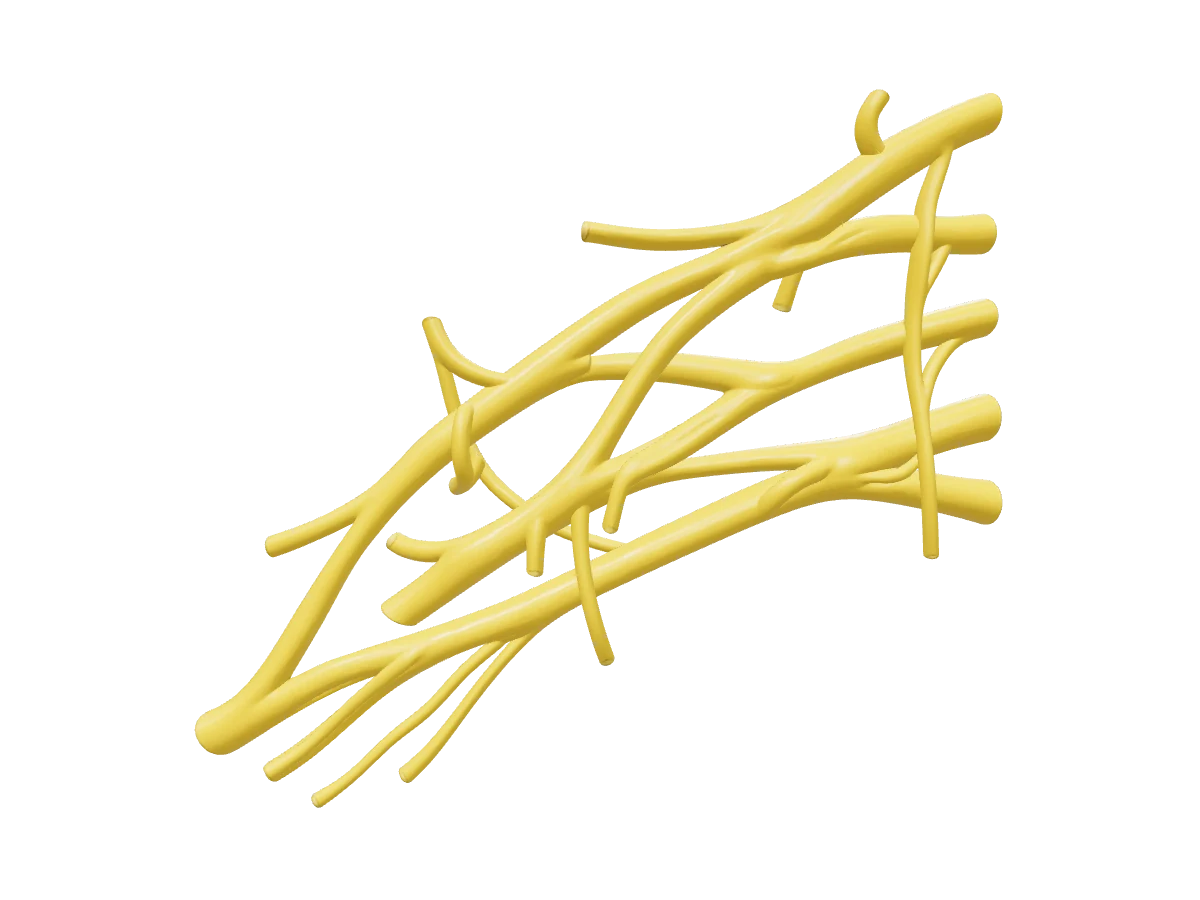
Brachial plexus — 3D model

Brachial plexus

Read it right to left: the five roots emerge between scalenus anterior and medius, form three trunks, split into anterior and posterior divisions behind the clavicle, and regroup as three cords named for their position around the axillary artery.

Explore with hotspots
SBA questions
1,500
curriculum topics
28
syllabus domains
10
pearls of the day
0
interactive 3D models
2
Musculoskeletal tissues: structure & function Bone metabolism, arthropathies & genetics Biomechanics & biomaterials Applied anatomy & surgical approaches Infection, thromboembolism, pain & diagnostics Statistics, evidence, ethics & orthotics Bone & soft-tissue tumours Trauma principles, polytrauma & open fractures Upper limb trauma Pelvis, acetabulum, hip & femur trauma Knee, tibia, ankle & foot trauma Spinal trauma Hip arthroplasty Young adult hip & non-arthroplasty Knee arthroplasty & osteotomy Soft-tissue knee & sports injuries Forefoot & the diabetic foot Ankle & hindfoot Degenerative spine & spinal emergencies Spinal deformity & inflammatory spine Shoulder Elbow Hand Wrist & brachial plexus The paediatric hip Foot, lower limb deformity & neuromuscular Paediatric trauma Infection, syndromes & congenital conditions

01Try it, no account

Try free FRCS (Tr & Orth) SBA questions

A free sample from across the syllabus, with the full explanation under every question. Have a go at this one — rate your confidence first, the way the app asks you to.

  • Lean clinical vignettes with five same-category options — the structure of the JCIE sample questions
  • Every explanation names what the stem is really testing, then justifies the answer and the distractors
  • A reference closes each explanation: BOAST, NICE, Miller's Review, Rockwood and Green, Ramachandran
07Trauma·Trauma principles, polytrauma & open fractures
medium

A 28-year-old motorcyclist has bilateral closed femoral shaft fractures and bilateral pulmonary contusions. After six units of red cells his blood pressure is 95/60 mmHg, temperature 34.6 °C, lactate 4.6 mmol/L and platelet count 85 × 10⁹/L.

What is the most appropriate management of his femoral fractures in the next few hours?

How sure are you?

02Explanations that teach

Understand the reasoning behind each answer

The exam is passed on judgement, not recall. So every explanation follows the same four moves — the ones you'll make in the exam hall.

Explanation · Trauma · Polytrauma

This is an under-resuscitated polytrauma patient, and the hypothermia, coagulopathy and raised lactate mean the femoral fractures need damage control, not definitive fixation.

Rapid spanning external fixation controls pain, bleeding and ongoing soft-tissue injury while limiting the surgical second hit; the frames are converted to nails once the physiology has recovered.

Reamed or unreamed nailing and bridge plating are definitive procedures that add blood loss and embolic load in a patient with pulmonary contusions; skeletal traction does not stabilise the fractures and prevents upright nursing.

Reference: Pape HC et al., J Orthop Trauma 2005; Rockwood and Green's Fractures in Adults 9e.

Name the diagnosis the vignette hid

The stem implies, never states. The explanation says it out loud first.

Justify the single best answer

The mechanism and the threshold that make it best — not just "correct".

Dismantle the distractors

Why each close contender fails on this stem. Same-category options, one discriminator.

Cite the source

Current UK guidance first, then the standard texts, so you can check us.

03Mapped to the JCIE blueprint

Revise trauma and orthopaedics by topic

Every question is tagged to one of 28 topics across the ten domains of the syllabus — applied basic science, oncology, trauma, hip, knee, foot and ankle, spine, shoulder and elbow, hand and wrist, and paediatrics — so you can drill a weak area tonight and see the gap close.

See the full FRCS (Tr & Orth) syllabus and revision topics, with question counts for every topic.

04Sit the exam before the exam

Practise with timed mock papers

The real format, end to end: two papers of 120 questions, 2 hours 15 minutes each, a question navigator, flagging, and review only after you submit. Watch an answer go through the app — confidence first, then the reveal, then where it lands on your readiness picture.

  • Wall-clock timer that survives a refresh
  • Flag, skip and return — just like Pearson VUE
  • Breakdown by topic, difficulty and domain after you submit

Confidence × competence

Last 48 answers

Confidence →Correct →

Underconfident

unsure · correct

0

Mastery

confident · correct

0

Knowledge gap

unsure · wrong

0

Dangerous misconception

confident · wrong

0

5 dangerous misconceptions — confidently wrong on stress relaxation versus creep, the open fracture debridement windows and pelvic binder position. Queued for tonight's Daily Five.

05Analytics that tell you what to fix

Track your progress across the syllabus

Before every answer you rate your confidence. Combined with whether you were right, each attempt lands in one of four quadrants — and the one that matters most is the dangerous misconception: confidently wrong. We find those and bring them back until they're fixed.

Exam-readiness score
A composite estimate banded from Developing to Exam-ready.
Calibration
Are you over- or under-confident, and on which topics?
Topic mastery
Coverage and accuracy for every one of the 28 topics.
Trends
Accuracy and speed over time, by paper and by session.

06Revision that fits the rota

Five minutes a day — the Daily Five

On the commute, between cases, in the coffee queue. Every day the app builds you a five-minute session: a drill from your weakest topics and lapses, one surgical pearl to flip and cement, and a micro-case that tests your judgement across three decisions.

Smart drill

Five questions picked for you: weak topics, lapses and new ground, with spaced repetition that brings misses back on schedule.

1,500 Qs

Pearl of the Day

Flip-card essentials — classifications, surgical approaches, biomechanics — added as each set is checked against its reference.

0 pearls

Micro-case

One patient, three decisions. An evolving vignette that trains judgement, not just recall.

0 cases

07Free, no account

Learn for free — notes, diagrams and interactive 3D

A growing library of original revision articles — open fractures, fracture healing, biomechanics — and interactive 3D anatomy you can rotate, zoom and explore by hotspot: the brachial plexus and the wrist in cross-section to begin with.

08Editorial standards

How the questions are written and reviewed

No recalled questions, no invented exam frequencies, no guaranteed-pass claims. Just a transparent process you can read in full.

Written to the official structure

Every item follows the JCIE sample questions: lean vignette, five same-category options, one defensible best answer.

Referenced to current UK guidance

BOAST and NICE first; Miller's Review, Rockwood and Green, Campbell's and Ramachandran for the rest. Where a US text and UK guidance differ, UK guidance wins.

Honest about review

Every item is checked against its cited reference. No orthopaedic surgeon has reviewed the bank yet: specialist review is pending, and we will publish which sections have had it — no claims of sign-off that hasn't happened.

Open corrections

Spot an error? Report it from any question. We triage every report, fix or retire the item, and record the change.

09Simple, honest pricing

Choose your revision plan

Start free. Pay monthly, or save with a one-off block that covers your whole run-up to the exam and never auto-renews.

Free

£0

no card required

  • A free sample of questions drawn from across the syllabus
  • Daily Five drill
  • Core analytics: accuracy, streaks & topic breakdown
  • Preview of the revision notes library as it is published
Create a free account

Essentials

£99

for 6 months · or £24.99/mo

  • The full single best answer question bank, mapped to the JCIE syllabus blueprint
  • Simple Question Mode & Study (tutor) Mode
  • Timed mock examinations in the real two-paper format
  • Daily Five drill with spaced review
See Essentials

Fellowship

Most popular

£179

for 6 months · or £44.99/mo

  • Everything in Essentials
  • Adaptive learning engine with spaced repetition
  • Confidence-vs-competence mastery analytics & exam-readiness estimate
  • The revision notes library as it is published
See Fellowship

Prices in GBP, payment by Stripe. Monthly plans cancel any time; blocks never auto-renew. Full refund within 14 days if you've attempted fewer than 20 questions. Full comparison

Questions about FRCS Orth Section 1

Is FRCS Orth Part 1 the same as Section 1?

Yes. The JCIE calls the written examination Section 1 of the Intercollegiate Specialty Examination in Trauma & Orthopaedic Surgery; trainees often call it Part 1 or Part A. It is two single best answer papers of 120 questions, each lasting 2 hours 15 minutes, sat on one day.

What do I get for free?

A sample of questions with full referenced explanations on the free questions page — no account needed — plus, with a free account, the Daily Five drill, core analytics and a preview of the notes library as it is published. No card is required.

Who writes and reviews the questions?

Questions are original items written to the structure of the JCIE sample questions against current UK guidance and standard texts, and every explanation ends with its reference so you can check it. No orthopaedic surgeon has reviewed the content yet; specialist review is pending and we will say which sections have had it. Read how the questions are written and reviewed.

How is my exam readiness calculated?

Before each answer you rate your confidence. We combine that with whether you were right to place every attempt in a mastery quadrant, then derive a composite readiness score across the syllabus — the method is explained inside the app.

Can I cancel?

Monthly plans can be cancelled at any time and run to the end of the paid month. The 3- and 6-month blocks are one-off payments that never auto-renew. If a purchase isn't right for you, message us within 14 days having attempted fewer than 20 questions for a full refund.

Start with 20 free questions

Create a free account with Google and go straight into the sample bank, today's Daily Five and your readiness dashboard. No card required.